
DESTINATIONS ACROSS AFGHANISTAN
Afghanistan is a destination rich in history, culture, and natural beauty. From ancient historical sites and vibrant local traditions to dramatic mountains and remote landscapes, Afghanistan offers unique travel experiences for adventurous and culturally curious travelers. Our guided tours in Afghanistan highlight important cultural heritage locations, historical landmarks, and scenic regions across the country. As a local Afghanistan tour company, we design travel experiences that allow visitors to explore the country responsibly while gaining authentic insight into its people and traditions. Each destination is carefully selected to provide meaningful and memorable journeys.
Kabul
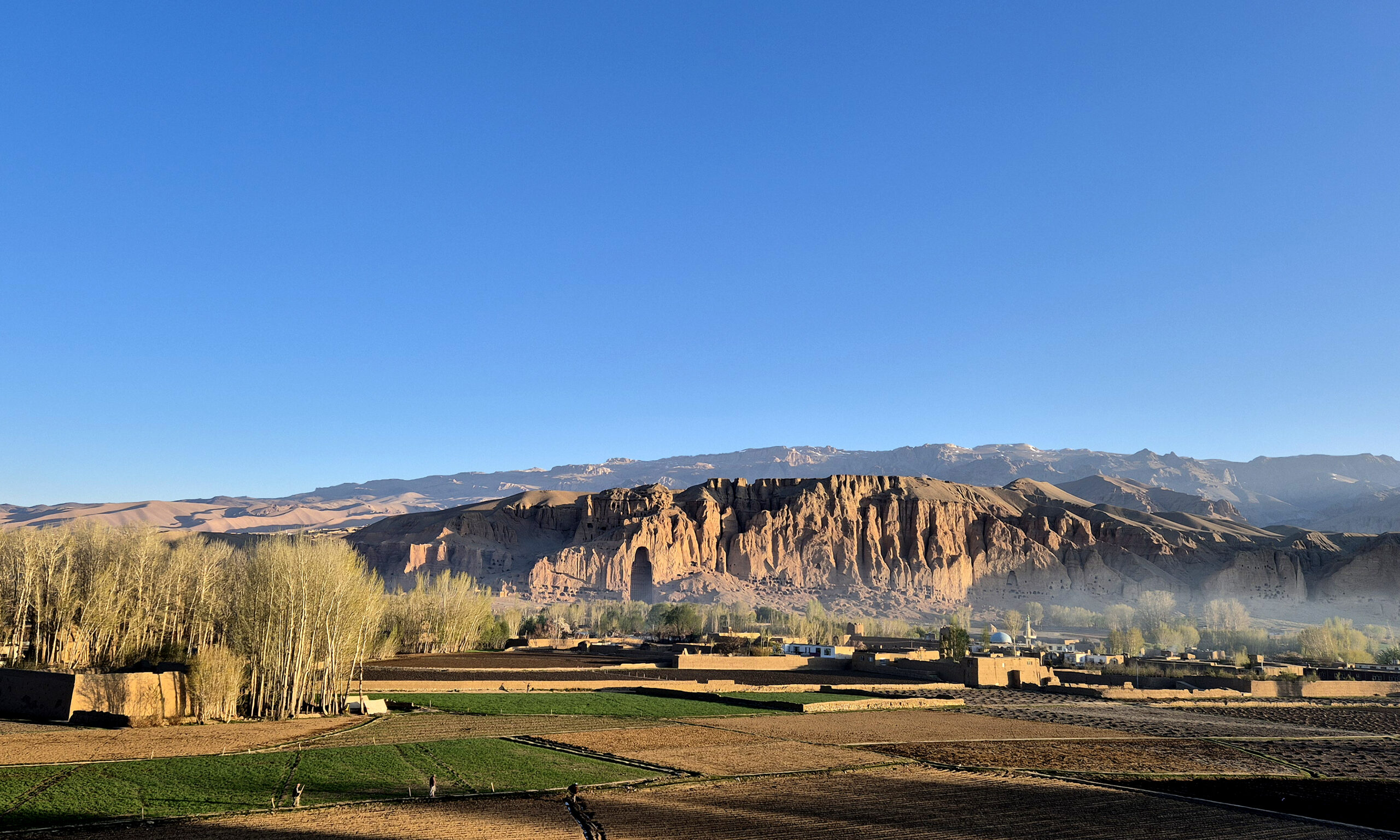
Kabul is an ancient city where history, trade and everyday life intertwine, reveling a city shape by centuries of faith, resilience and quiet beauty. It is located in eastern Afghanistan, framed by rugged mountain peak. It’s the country’s capital, and largest city, that is home to more than 5.5 million people—most living in bustling urban neighborhoods. Trade caravans once crossed these same routes, moving north to south and east to west, making the city a natural crossroads for cultures, empires, and stories.
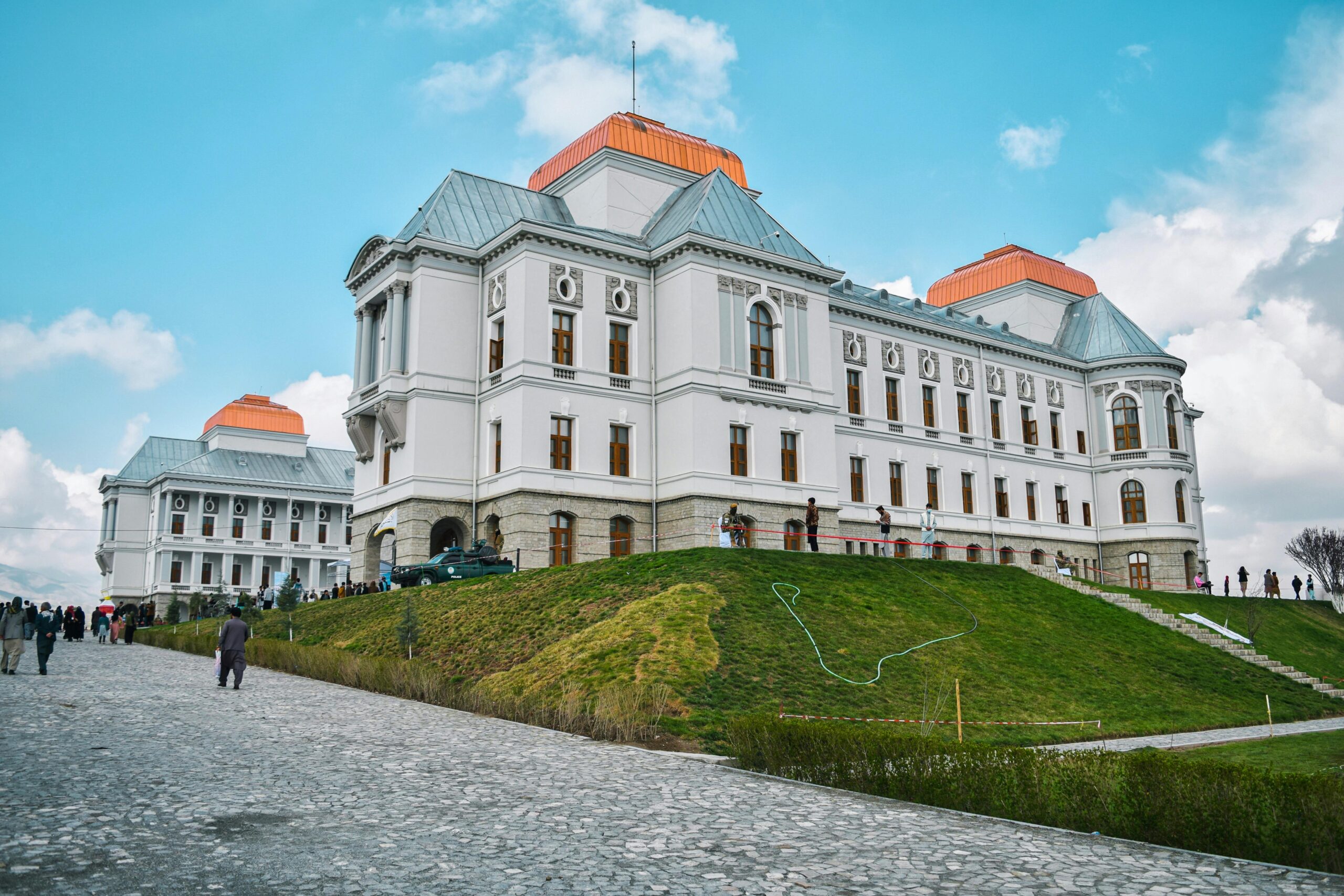
Kabul’s history is everywhere—you just have to slow down to notice it. Walk through Bagh-e-Babur, and you’ll hear the whisper of water flowing through stone channels, just as Emperor Babur described in the Baburnama in 1504. The garden rises in elegant terraces, shaded by old plane trees. At its heart lies Babur’s tomb, a reminder that this city once cradled the beginnings of the Mughal Empire. Then Darul Aman Palace tells a different story—one of ambition, conflict, and revival. Built in the 1920s by King Amanullah Khan as part of a vision for a modern capital, the 150-room palace was later scarred by war. Its grand halls stood silent for years. Then, for the 100th anniversary of Afghanistan’s independence in 2019, it was restored—brick by brick—to its original dignity.
Higher in the city, the Bagh-e-Bala Palace once served as Kabul’s first museum in 1919, housing royal manuscripts, art, and weapons before the collection was moved to what is now the National Museum of Afghanistan. The museum today holds one of Central Asia’s richest archaeological archives, spanning prehistoric tools, Buddhist sculptures, Hindu relics, and Islamic art. Among its treasures is the famed Bagram Collection, discovered in 1939, containing over 1,800 pieces influenced by Greece, Rome, Egypt, and India—proof that Kabul was connected to half the ancient world.
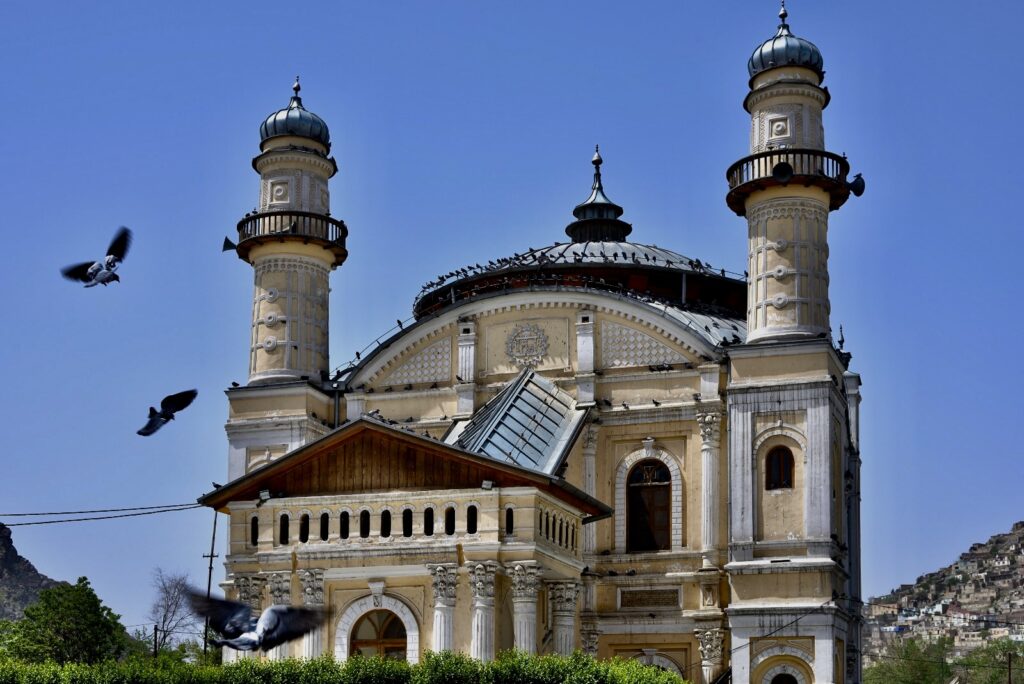
Kabul has monuments that tell stories of the most recent history. The Shrine of Sakhi (Rawza-e-Sakhi) is one of Kabul’s most cherished spiritual and architectural gems. Built in the 18th century and dedicated to Sakhi Shah-e-Mardan, a revered companion of the Prophet Muhammad, it shimmers with delicate tile-work and poetic calligraphy. The Shah Do Shamshira Mosque, with its unique two minarets design, stands by the river in brilliant yellow and white, unlike any other mosque in Afghanistan. And on the hills of Paghman Valley, the Taq-e-Zafar Arch rises proudly in the middle of the market-a stone symbol of freedom built by King Amanullah Khan in 1919 to celebrate Afghanistan’s independence from British rule.
Kabul isn’t just a capital—it’s a city shaped by poets, kings, traders, architects, and everyday families. It carries layers of history but still feels alive, personal, and warm. The tea is strong, the bread is fresh, the evenings are gentle, and the stories are endless. Visit once, and you’ll understand why so many travelers leave with more memories than photographs.
Must-see places Worth Exploring
- Bala Hissar FortMausoleum of Timur Shah, a beautifully domed 18th-century tomb honoring the founder of the Durrani Empire
- Minar-e-Istiqlal (Independence Minaret) and Minar-e-Istiqlal at Bagh-e-Bala
- Guldara Stupa
- Old City Walls and Minaret of Chakari
- Istalif
- Bibi Mahro Park and Bibi Mahro Hill
- Eid Gah Mosque
- Mausoleum of Zahir Shah & Nadir Shah
- Darulaman Palace
- National Museum
Kandahar
Kandahar is situated in the south of Afghanistan “it is considering as a capital of southern zone of Afghanistan” and its location alone tells you a lot about its story. For centuries, this has been a crossroads for traders, travelers, and armies moving between Central and South Asia. It’s a city shaped by movement—caravans, commerce, ideas—and that energy is still felt today in its busy markets.
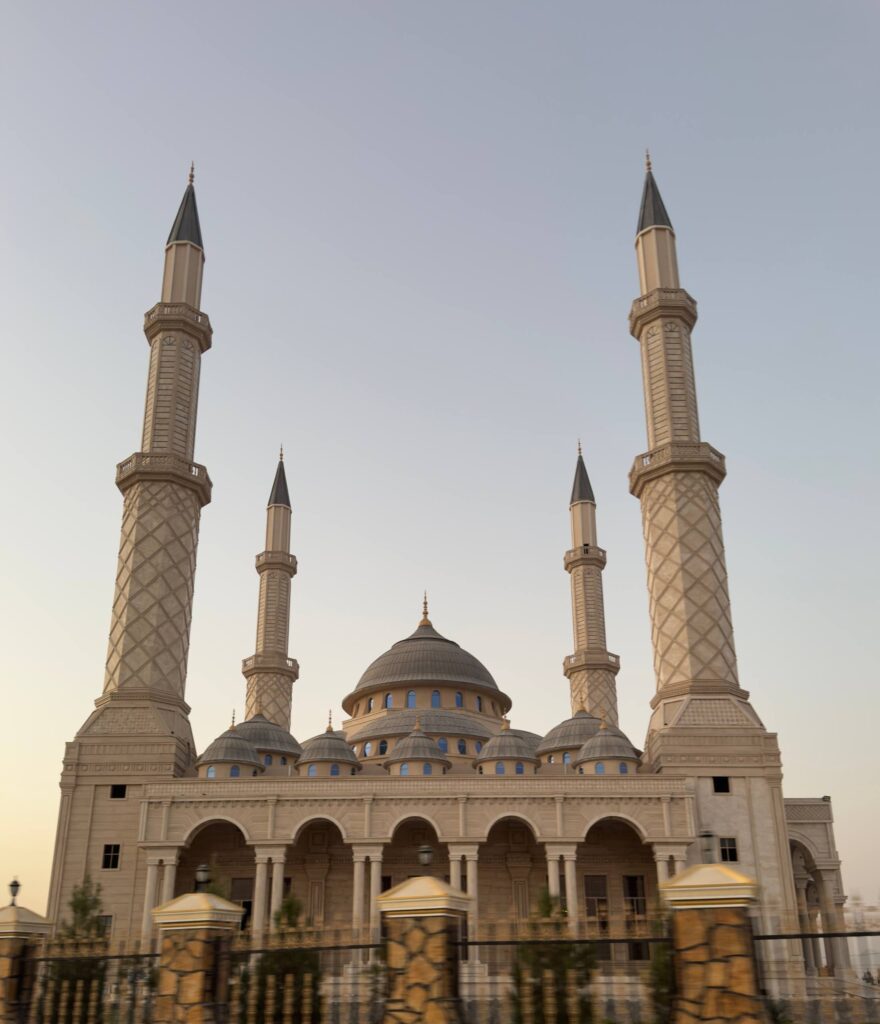
The city’s history goes back to the era of Alexander the Great, but its heart truly became Afghan when Ahmad Shah Durrani founded modern Afghanistan here in 1747, choosing Kandahar as his capital. That decision anchored the city in the country’s identity, a role it has never really let go of. When you walk through the old city and you’ll see why: history isn’t locked in museums, it lives in bricks, dust, and daily ritual.
Kandahar’s landmarks carry both spiritual weight and historical depth. The Shrine of the Cloak, believed to house the sacred cloak of the Prophet Muhammad (peace be upon him), is the city’s most revered site—quiet, powerful, and deeply respected. Then The 40 Steps (Chilzina), carved into a rocky hillside, still bear inscriptions from Mughal ruler Babur, offering sweeping views over the city below. And scattered through the urban fabric are centuries-old mosques like the Friday Mosque of Kandahar, where time seems to move a little slower under fading frescoes and arched corridors.
Then there are the bazaars. The old city market is more than a shopping stop—it’s a sensory experience. The scent of cardamom and dried fruits hangs in the air, shopkeepers call out greetings, metalworkers hammer copper into shape, and bright fabrics spill into the walkways. Kandahar has always traded in culture as much as goods.
Agriculture remains one of the city’s quiet points of pride. Kandahar’s pomegranates are legendary—ruby-red, sweet-tart, and shipped across the region. The grapes and melons here are just as memorable, grown in orchards and farms fed by the Arghandab River. In summer, roadside vendors stack chilled melons under makeshift shade, a simple treat that feels like part of the season’s rhythm.
Kandahar isn’t a city you just pass through. It’s a place that stays with you—ancient yet alive, proud without needing to say much, complex but welcoming to anyone willing to listen to its stories. It carries Afghanistan’s past in one hand, and its everyday life in the other, blending both in a way that feels unmistakably real.
Must-see places
- Cloak of prophet Mohammad
- Shrine of Ahmad shah baba
- Shrine of Mirwais Khan Hotak
- Chilzina
- Coverd Bazaar
Ghazni
Ghazni is one of the most important cities in Afghanistan. It is the capital of Islamic cities, meanwhile; it has quiet great history shaped by centuries, and it stays in your mind long after you leave.
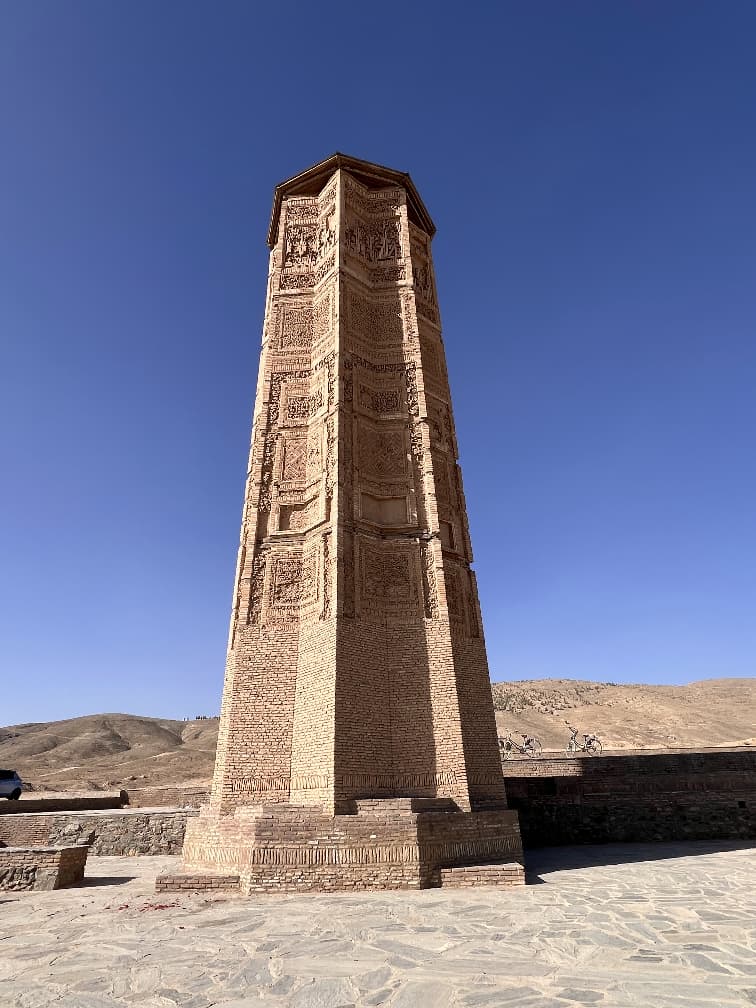
It is located in southeastern Afghanistan, surrounded by rugged hills and wide plains, it carries the quiet confidence of a place that has seen centuries rise and fall. Most of the people know Ghazni because of the Ghaznavid Empire, which reached its peak in the 10th and 11th centuries under Sultan Mahmud of Ghazni. Standing here today, it’s easy to imagine why he chose this as his capital. The land is strategic, the climate is cooler than many Afghan cities, and the trade routes once connected it to Persia, India, and Central Asia. Therefore, it is not relying on scenery, its past reveals itself through weathered stones, aged brickwork and fading inscription.
One of the city’s most iconic landmarks is the Minarets of Ghazni. These twin towers, built in the 12th century by Sultan Masud III and Bahram Shah, rise about 55 meters high. Their detailed geometric patterns and Kufic calligraphy are still visible, even after surviving earthquakes, invasions, and time itself. Another must-see is the Ghazni’s Citadel (Qala-e-Ghazni), an ancient fortress on a hilltop that has protected rulers and armies for over 1,000 years. The climb isn’t long, but it’s steep enough to make you pause, catch your breath, and appreciate the view—rooftops, distant mountains, and a horizon that feels endless. The walls have been rebuilt many times, yet the spirit of the place remains unchanged: strong, watchful, and timeless.
Ghazni’s past is connected with well-known scholars and religious personalities, there’s the Tomb of Al-Biruni, one of the greatest scientists and thinkers of the Islamic Golden Age. He lived in Ghazni for many years and produced groundbreaking work in astronomy, mathematics, geography, and anthropology. His resting place is modest, but meaningful—especially for travelers who appreciate the intellectual heartbeat of a city, not just its monuments. Ghazni also holds religious significance. The Shrine of Sakhi Sarwar and several old mosques around the city reflect its spiritual heritage, drawing local pilgrims and history-focused visitors alike.
Then there’s the Tomb of Sultan Mahmud, located within a complex that once included a grand madrasa and palace gardens. The site was partially destroyed in history, but the mausoleum still stands as a reminder of his power and influence, on the other hand; Walking through Ghazni’s bazaars brings a different kind of discovery. Shopkeepers call out greetings, the smell of fresh naan drifts from small bakeries, and the rhythm of daily life continues much like it has for generations. Try the local dishes—rich Kabuli Pulao, Mantu, Shorwa, and if you’re lucky, traditional sweets sold near the markets during busy hours.
In conclusion; What makes Ghazni special isn’t just its past, but the way it carries it. The city feels like a bridge between worlds—Afghanistan’s literary heritage, Islamic architecture, and Afghan resilience. If you’re traveling through Afghanistan with a curiosity for empire-era history, ancient science, and cultural roots that go deep, Ghazni deserves more than a quick stop. It deserves a slow walk, an open mind, and a moment of silence beside its minarets.
Places to Visit
- The Citadel of Ghazni
- Shrine of Sultan Mahmud
- Ghazni Minarates
- Al-Biruni’s Tomb
Ghor
Ghor is a pivotal place in Afghanistan’s history. It is a quiet rugged province that once shaped the fate of empires. Long before the world knew it as a remote highland region, in the medieval period, it was the heartland for the Ghorid Empire — a dynasty that ruled territories which reaches far, from eastern Iran across Central Asia and deep into northern India. Though it appears remote today, its pas reveals a center of power that shaped the political order of some countries in Asia. it’s hard not to feel the weight of that history beneath your feet.
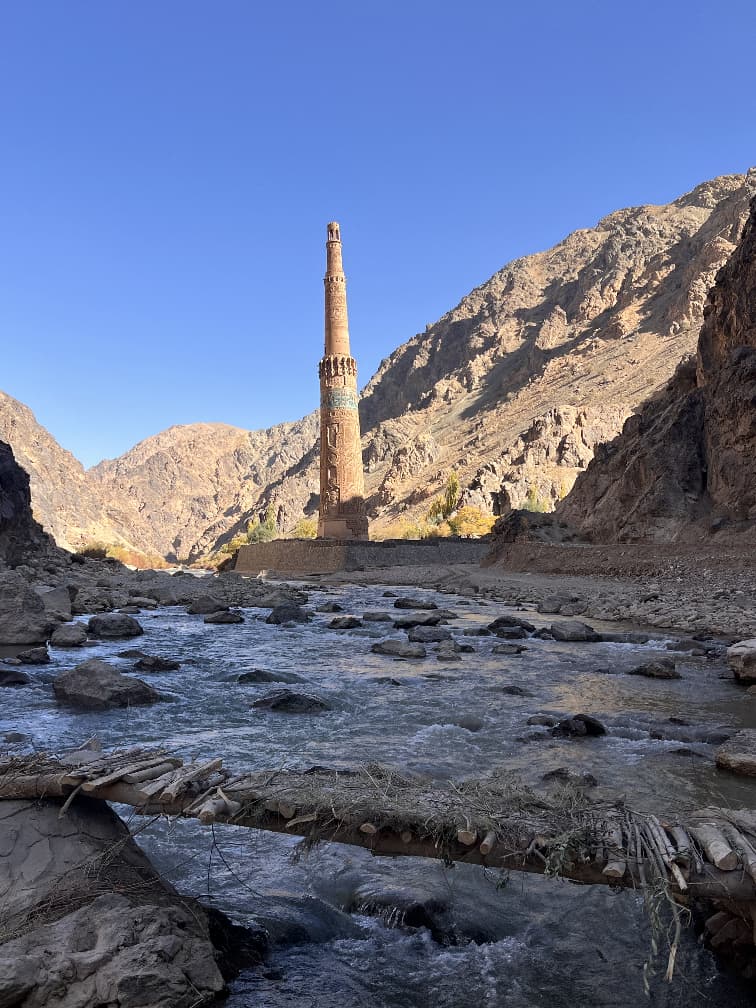
The most famous monument of the province is, without question, the Minaret of Jam. An exceptional Islamic Architecture achievement, built in the 12th century, this towering structure rises more than 60 meters above the Hari River” Bedan valley” like something pulled from a dream. Its surface is wrapped in intricate brick patterns and elegant Kufic Arabic inscriptions, carved into the structure with a precision that still surprises visitors. It’s no wonder UNESCO listed it as a World Heritage Site. It doesn’t just represent architecture. It is a masterpiece that reflects a high level of technical and artistic skills of Ghorid Era that still stand strong even centuries later.
Other than Minaret of Jam. Near by the Minaret of jam, there are the persevered remains of fortified cities, hilltop citadels, ancient watchtowers, and defensive walls dating back to the eleventh and twelfth centuries. Some ruins were beside old trade routes; others are staying close to mountainsides where armies once marched. There is evidence that shows civilizations, road networks, and city walls that hint at an organized world of governance, strategy, and everyday life. These are not polished tourist sites — they are raw, untouched fragments of the past. And that’s exactly what makes them powerful. You’re seeing them where they were always meant to stand.
What makes Ghor special is its landscape and historical sites. The structures remain secured in their original locations, giving you a sense of the empire’s true build up-not something recreated in museums, but preserved in open air. Over 800 years have passed, yet the region still carries evidence of ambition, artistry, and resilience.
Ghor isn’t very well-known, but it is one of the most important province with great history and tradition. Its story speaks in stone and brick, in river wind and mountain silence. It’s the birthplace of a dynasty that changed Asia’s political map, and a rare place where history hasn’t been relocated, rewritten, or replaced — only patiently witnessed. For travelers drawn to early Islamic heritage and medieval empire history, few destinations feel this real, this humbling, or this unforgettable.
Places to Visit:
- Minaret of Jam
- Bazaar of Chagcharan(Firuzkoh)
Helmand
Helmand is a historically and environmentally significant region of southern Afghanistan where the country’s longest river has shaped patterns of settlement, agriculture and power for more than thousands. it extended over 1,000 kilometers, turning a vast desert into the agricultural heart of the south. To understand Helmand is to understand the struggle between the desert and the water, a theme that has dictated the valley’s history from the ancient Persian empires to the massive engineering projects of the 20th century.
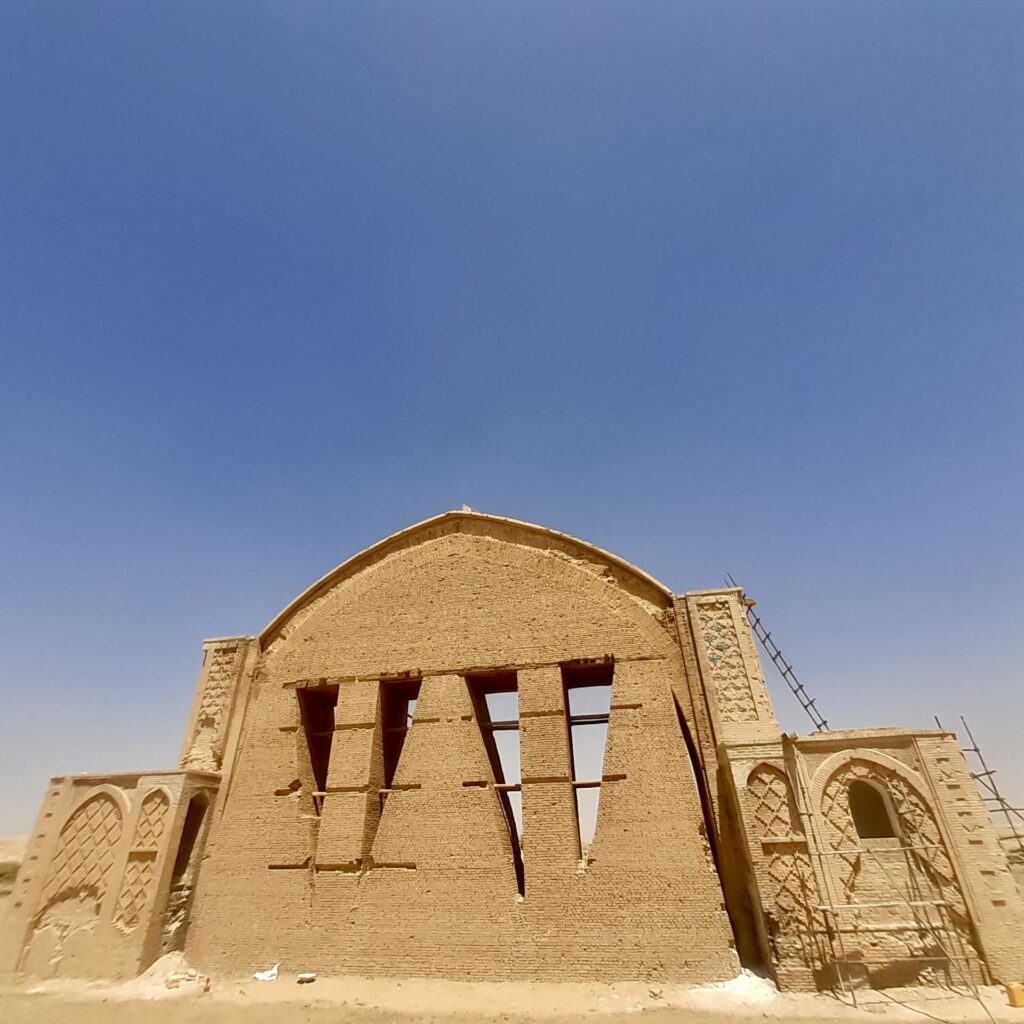
Historically, the Helmand Valley was part of the ancient region of Arachosia and later became known as Sistan (the land of the Sakas). Because the river provided a reliable water source in an otherwise arid landscape, the valley became one of the most productive agricultural zones in Central Asia. Ancient civilizations recognized its value; the Achaemenids and later the Greco-Bactrians established sophisticated irrigation systems here, remnants of which can still be found buried under the silt of centuries.
If you look for the historical soul of Helmand, you find it at the intersection of the Helmand and Arghandab rivers. Here lies the ancient city of Bost (near modern-day Lashkar Gah).The most iconic landmark is the Arch of Bost (Qala-e-Bost). This 11th-century decorative arch is all that remains of a magnificent Ghaznavid desert palace. During the Middle Ages, Bost was a thriving commercial hub and the summer capital of the Ghaznavid Empire. The city was famous for its gardens, its sophisticated cooling systems, and its massive fortress. Tragically, much of the city’s grandeur were destroyed during the Mongol invasions, leaving behind the lonely, sun-baked ruins that still stand as a testament to the valley’s medieval wealth.
In more recent history, the valley’s fertile soil has become a double-edged sword. While it remains a vital source of food, it also became the center of the world’s opium production and a primary theater of conflict during the last four decades. The same irrigation canals built for wheat and fruit eventually watered fields of poppy, weaving the valley into a complex web of global economics and local insurgency.
Helmand is more than a headline of conflict; it is a region of deep historical layers. From the intricate brickwork of the Ghaznavid ruins to the concrete walls of the Kajaki Dam, the valley reflects the human ambition to control nature in one of the harshest environments on earth. It remains a place where the river dictates the pace of life and the fate of those who live along its banks.
Places to visit:
- Qala-e-Bost
- Kajaki Dam
Herat
Herat is known because of its history and developed city, and it is located on ancient trade “silk road”, in west of Afghanistan. It has borders with Iran and Turkmenistan, in addition; it is considered as the business hub of Afghanistan.
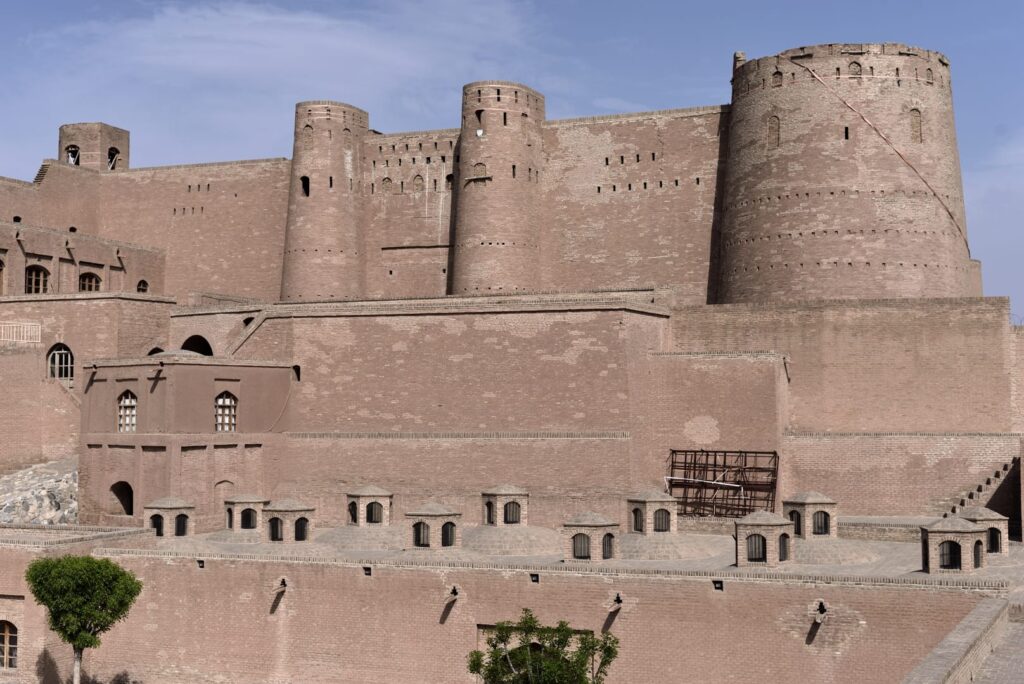
When you arrive in Herat, it feels different from anywhere else in the country. There’s a calm confidence to the city—shaped by centuries of trade, poetry, empire, and artistic exchanges. Herat’s history is the true example that tells you the story when you look at bricks, arches, and carved tiles.
The city’s location has always made it a crossroads. Caravans once passed through here on their way between Persia, Central Asia, and India, leaving behind more than goods—they left ideas, language, and culture. Today, that legacy is most visible in the city’s extraordinary landmarks. The Citadel of Ikhtiyaruddin(Herat Citadel), dating back to the time of Alexander the great and expanded during the dynasty of Timurid’s, rises above Herat like a sand-colored crown, restored yet still rugged, still commanding. Then there’s the Great Mosque of Herat, a masterpiece of Timurid’s architecture known for its blue tiled, one of the most breathtaking examples of Islamic architecture in the region. It’s a place that pulls you into stillness, even if you only planned to stay a minute.
Herat isn’t only about monuments, there are lots of picnic places that people go there during the weekend. A short drive west brings you to wide-open spaces that locals go there for weekend. Youngster have different activates in Olang such as flying kites, car drafting on mud, and play some local games. Band-e-Sabzak, with its rolling hills, is a favorite for picnics and overnight camping, especially when the spring winds soften the air.
What truly defines Herat is its people. If there’s one thing every visitor remembers, it’s the warmth. Herat’s people take hospitality seriously, not as a performance, but as a way of life. Outsiders are greeted like returning friends. Conversations continue long, tea is offered quickly. You don’t just pass through Herat—you’re absorbed into it, even briefly. Food plays an important role in that welcome. Kichiri, a humble rice, mung bean, and dry meat “landi” dish, is a staple dish you’ll find boiling in homes and local restaurants especially in winter, warm with subtle spices. And Bolani, the beloved stuffed flatbread, comes crisp from the pan, usually filled with potatoes or leeks, brushed lightly with oil and served with cooling yogurt. These aren’t just dishes—they’re part of everyday life, shared generously and eaten slowly.
Herat leaves a good impression and lasting memory. It’s in the echo of your footsteps inside the mosque. The glow of the citadel at sunset. The smell of pistachio forests after rain. The effortless kindness of the people. It’s a city for travelers who enjoy history but crave connection, who want scenery but also conversation, who want to taste a place rather than just photograph it. If Afghanistan has a soul made of many colors, Herat is one of its brightest. Quietly majestic. Effortlessly welcoming. Impossible to forget.
Places to visit:
- Herat Citadel
- Khawaja Abdllah Ansari’s Tomb
- Jami Tomb
- Takht-e-Safar
- Mokhtar Zadah Caravansari
- Carpenters Alley
- Jewish Bath
- Yu-Aw Synagogue
- Band-e-Sabzak
- Chisht-e-Sharif
- Malan Bridge
Jalalabad
Jalalabad is often called the “Evergreen City” of Afghanistan, and for good reason. While much of the country is defined by high-altitude plateaus and harsh winters, the Jalalabad Valley sits in a subtropical pocket where the Kabul and Kunar rivers meet. It is a place of orange groves, palm trees, and a climate that has made it the traditional winter capital for Afghan rulers for centuries.
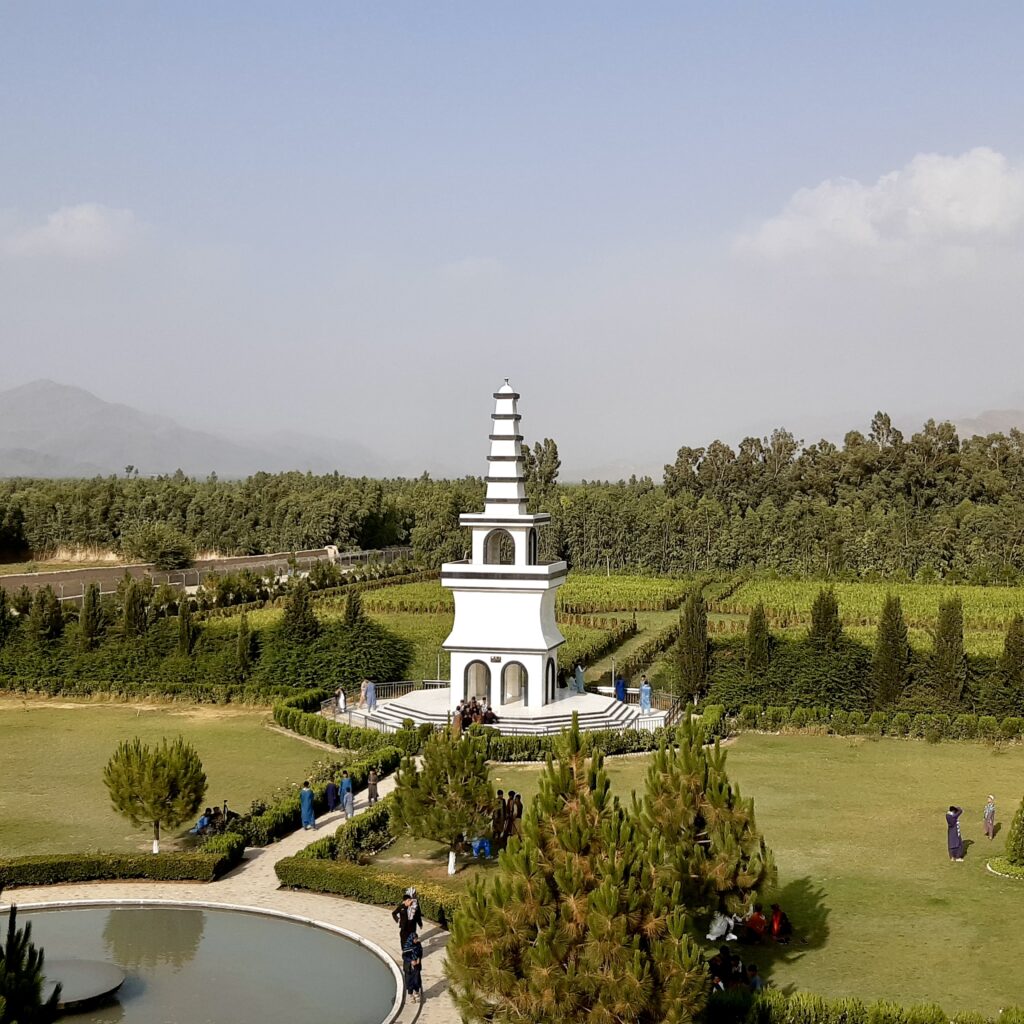
The history of the Jalalabad Valley is inseparable from its role as a transit hub. Positioned between Kabul and the Khyber Pass, it has always been the primary gateway to the Indian subcontinent. In antiquity, this region was a core part of the Gandhara civilization.
The valley was once a global center for Buddhism. Between the 2nd and 7th centuries, it was home to thousands of Stupa and monasteries. The most significant historical site from this era is Hadda. Located just south of the modern city, Hadda was a major pilgrimage site where archaeologists discovered thousands of Greco-Buddhist sculptures. These artifacts are world-renowned because they show a unique fusion: local Buddhist spirituality expressed through the artistic techniques of the ancient Greeks, a legacy left behind by Alexander the Great’s successors.
📚 The Mughal Legacy
The modern city of Jalalabad was founded in the 1560s by the Mughal Emperor Jalaluddin Muhammad Akbar, from whom the city takes its name. However, it was Akbar’s grandfather, Babur, who first fell in love with the valley. In his memoirs, the *Baburnama*, Babur writes fondly of the region’s fruits and gardens.
One of the most beautiful remnants of this era is the Nimla Gardens, located about 40 kilometers from the city. Laid out by Emperor Jahangir and his wife Nur Jahan, the gardens follow the classic Persian “Charbagh” (four gardens) layout. With its ancient cypress and plane trees, Nimla remains one of the few surviving Mughal-era gardens in the region, offering a glimpse into the aesthetic refinement that once defined the valley.
In the 20th century, Jalalabad became a central pillar of Afghan national identity. It is the final resting place of King Amanullah Khan, the monarch who secured Afghanistan’s full independence from British influence in 1919. His mausoleum in the center of the city is a site of great national pride, symbolizing the country’s transition into the modern era.
The valley also holds the grave of Khan Abdul Ghaffar Khan (Bacha Khan), the “Frontier Gandhi.” A leader of the non-violent Pashtun movement against British rule, his choice to be buried in Jalalabad rather than in Pakistan was a powerful political statement, cementing the city’s status as a spiritual home for Pashtun culture and resistance across the border regions.
The Jalalabad Valley is not just a historical museum; it is a vital economic engine. Its position on the “Grand Trunk Road” makes it the most important trade link between Afghanistan and Pakistan. The valley’s ability to produce citrus and rice provides food security for the capital, Kabul, which lies just a few hours’ drive up the scenic, if treacherous, Kabul River Gorge.
Jalalabad is a valley defined by movement. It has seen the transit of Buddhist monks, Mughal emperors, and modern traders. Whether it is through the ruins of Hadda or the shaded paths of the Nimla Gardens, the valley reflects a history that is softer and greener than the rugged mountains surrounding it, yet just as resilient.
Places to Visit:
- Hadda Arejaeological Site
- Darunta Stupa
- Seraj-ul-Emarat Palace
- Mausoleum of King Amanullah Khan
- Nakamura Garden
Kunar
The Kunar Valley, carved out by the powerful Kunar River in eastern Afghanistan, is a land of stark contrasts. While often portrayed in modern media through the lens of conflict, it is historically one of the most significant corridors in Central Asia. Stretching toward the Hindu Kush Mountain and bordering Pakistan, Kunar is characterized by its dense forests, jagged peaks, and a population that has maintained a distinct sense of independence for millennia.
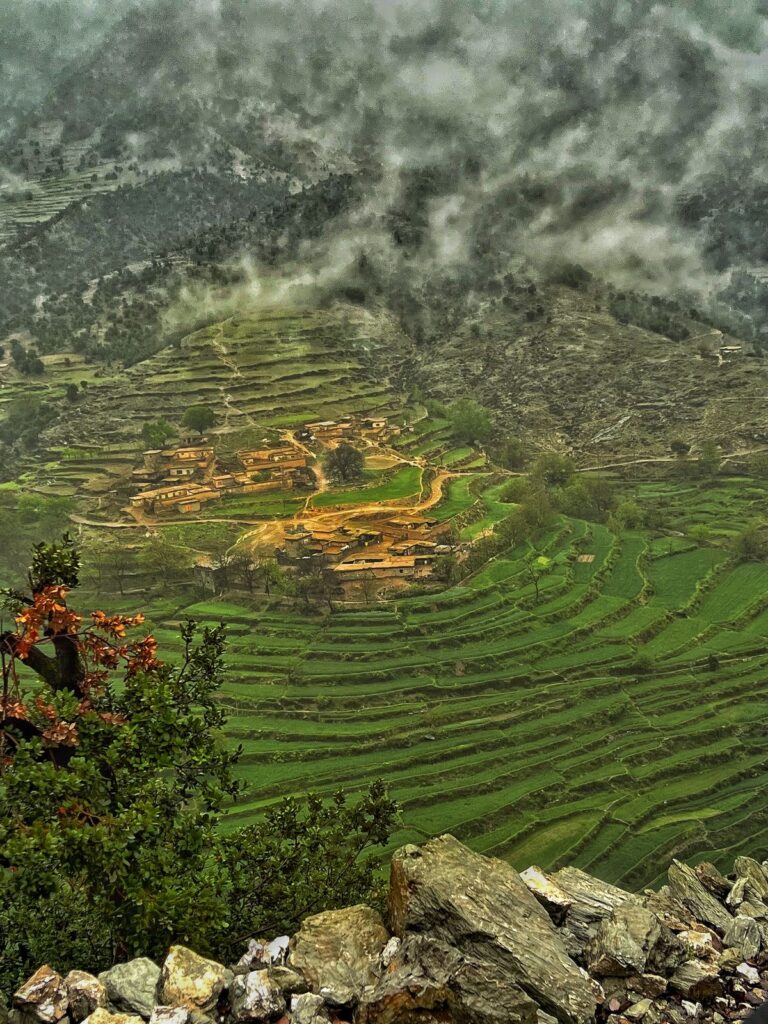
Kunar’s history is defined by its role as a transit point for empires. Because it sits on a natural route between the Afghan highlands and the Indus Valley, it has seen some of history’s most famous conquerors. In 327 BC, Alexander the Great led his campaigns through this region, facing stiff resistance from the local tribes in what was then known as the Aspasioi territory. The valley was once a part of the Gandhara civilization, acting as a bridge for the spread of Buddhism from the Indian subcontinent into the heart of Asia.
The human history of Kunar is unique because of its ethnic and linguistic diversity. It is one of the few places where the ancient Pashayi people—descendants of some of the region’s oldest inhabitants—live alongside Pashtun tribes. For centuries, the valley was part of a region known as *Kafiristan* (Land of the Infidels) because the inhabitants practiced ancient polytheistic religions. It wasn’t until the late 19th century, under Emir Abdur Rahman Khan, that the region was fully integrated into Afghanistan and converted to Islam, subsequently being renamed “Nuristan” (Land of Light), of which Kunar remains a vital neighbor and gateway.
Kunar is not as “built up” with monuments as Herat or Balkh, but its history is written in its geography and small, ancient ruins:
• Asadabad: The provincial capital has long been a strategic hub. It is widely claimed to be the birthplace of Jamal al-Din al-Afghani, one of the most influential Islamic political theorists and philosophers of the 19th century, whose ideas on Pan-Islamism influenced the modern Middle East.
• Ancient Fortresses: Throughout the valley, particularly near the mouths of the Pech and Dewagal rivers, one can find the crumbling foundations of ancient stone forts. These were used by local chieftains to control trade routes and defend against invaders for centuries.
• The Chigha Sarai Petroglyphs: Scattered across the province are ancient rock carvings that date back to the pre-Islamic era, depicting local wildlife and hunting scenes, serving as a silent record of the valley’s prehistoric inhabitants.
In recent decades, Kunar has gained a reputation for being nearly impossible to govern. During the Soviet-Afghan War, the rugged terrain of the Pech River Valley became a graveyard for armored divisions. The geography—steep slopes covered in holly oak and cedar—provided perfect cover for local fighters. This same terrain later made Kunar a focal point of the conflict between international forces and local insurgents, with the dense forests of the Korengal and Shuryak valleys becoming synonymous with the difficulty of mountain warfare.
Kunar Valley remains a place where nature still holds the upper hand. Its history is a long cycle of empires passing through but rarely staying, leaving behind a culture that is as resilient as the mountains themselves. To understand Kunar is to understand the “frontier” in its purest form: a place of ancient roots, strategic importance, and an unyielding spirit.
Places to visit:
- Narang Valley
- Asmar and Shury Valley
- Kunar River
Balkh
Balkh Province is often called the “Mother of Cities” this title is given through centuries of ongoing history and cultural influence. Balkh is located in northern Afghanistan, and it is the central zone of northern provinces of Afghanistan, this region represents one of the oldest centers of human settlement in Central Asia, where political power, spiritual thought, and civilization once connected.
The ancient city of Balkh, historically known as Bactra, lies about 22 kilometers west of present-day Mazar-e-Sharif. From as early as the 5th century BCE, it served as the capital of Bactria, benefiting from its position along the Silk Road. Trade routes connected Balkh to Persia, India, and China, allowing ideas and beliefs to travel as freely as goods. Over time, the city passed through the hands of major empires, including the Greeks under Alexander the Great, the Kushani, the Sassanid, and later Islamic dynasties, each leaving visible traces in architecture and urban design.
Beyond its political role, Balkh was a center of learning and spirituality. It is associated with figures such as Jalaluddin Rumi, whose poetry continues to shape global literature, and Avicenna (Ibn Sina), a foundational thinker in medicine and philosophy. The region also witnessed major religious transitions, evolving from a center of Zoroastrianism and Buddhism into a stronghold of Islamic scholarship and Sufi tradition.
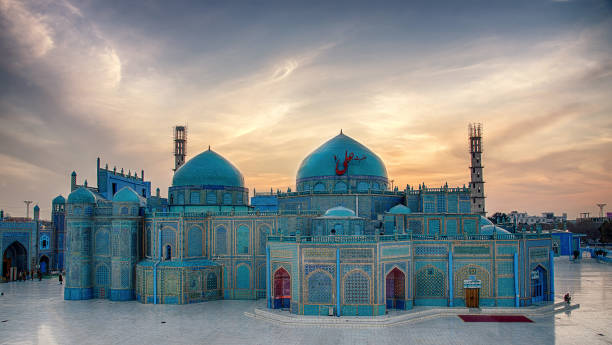
Several historical sites reflect this layered past. The ruins of the ancient city of Balkh preserve remnants of fortified walls and gateways that speak to its former importance. In Mazar-e-Sharif, the Shrine of Hazrat Ali-known as the Blue Mosque-stands as both an architectural landmark and a major pilgrimage site, admired for its blue-tiled facade and calm, devotional atmosphere that was built in 16th century by Timurid dynasty. The 9th-century No Gumbad Mosque, once used to be the Zoroastrian temple, considered Afghanistan’s oldest Islamic structure, offers insight into early Islamic architecture in the region.
Today, Balkh is not defined by a single era but by the accumulation of many. Its landscapes, monuments, and spiritual spaces reveal a province shaped by exchange, learning, and belief. To visit Balkh is to encounter the foundations of Afghan civilization, preserved not only in ruins, but in a cultural memory that continues to endure. Now, Mazar-e-Sharif is the hub of northern business which plays a significant role to stabilize the financial situation of northern provinces.
Must-see historical places
- Shrine of Hazrat Ali (Blue Mosque), Mazar-i-Sharif
- Ancient City of Balkh (Bactria)
- No Gumbad Mosque (Nine-Domes Mosque)
- Shrine of Khawaja Abu Nasr Parsa
- Bala Hisar(High Fort)
- Ayyaran Tower
- Bazar
Samangan
Samangan is one of northern Afghanistan provinces, a region where the history of dynasty and landscape come together with unusual clarity. Though it is considered as a conventional travel maps, Samangan has a special place in Central Asian history, shaped by imperial expansion, spiritual thoughts, and transcontinental trades “silk road”.
The province become famous during the Kushani era, when the Silk Road was more than a commercial artery—it was a channel for cultural and religious exchange. Between the 3rd and 5th centuries, Samangan developed into a significant Buddhist center, hosting monastic communities and welcoming pilgrims from across Central and South Asia. This period of prosperity left behind enduring architectural forms carved directly into the terrain, offering rare insight into the region’s pre-Islamic spiritual geography.
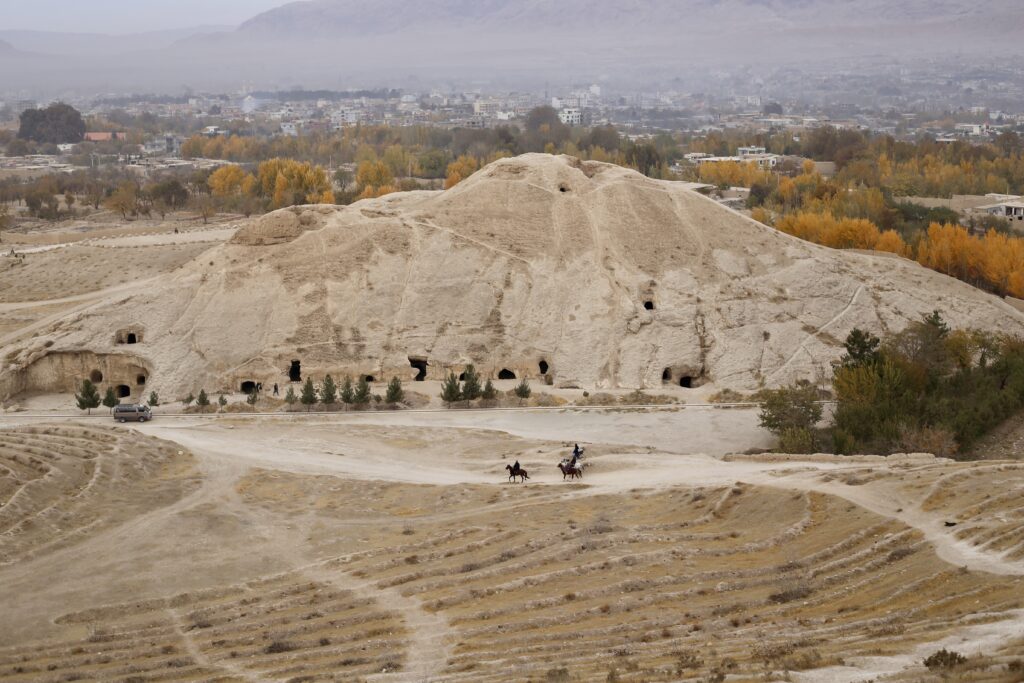
One of the most remarkable historical landmarks is Takht-e-Rustam, a monolithic Buddhist complex carved from a single rocky hill. The site includes a domed stupa at its summit and a network of meditation chambers and cave temples below. Its design represents one of the few surviving examples of rock-cut Buddhist architecture in Central Asia. The name itself, drawn from the legendary hero Rustam, shows how folklore and history exist in the province, enriching its cultural narrative without disappearing its historical importance.
Aybak, the provincial capital, reflects the later transformation of Samangan into an Islamic administrative region. Named after a Turkic military figure, the city served as a strategic and bureaucratic center in subsequent centuries. The old bazaar district, still active today, preserves the rhythms of daily Afghan life—artisans shaping clay, traders weighing spices, and farmers arranging seasonal produce. The market is not chosen as a selected attraction, yet it remains one of the province’s most telling cultural spaces, where commerce, craftsmanship, and community interaction unfold purely.
Beyond its urban life, Samangan’s rural landscape carries equal historical resonance. Once upon a time, Ancient caravan corridors crossed these territory, linking lands that now belong to modern Afghanistan, Iran, China, and the Indian subcontinent. Traces of old settlement walls, fortifications, and rest stops still appear across the countryside, subtle markers of a region that once connected empires rather than existed at their margins. The natural environment—almond orchards, wheat fields, and traditional mud-brick villages framed by the distant Hindu Kush—reinforces the province’s quiet but persistent historical presence.
Samangan’s cultural composition, largely shaped by Uzbek, Tajik, Hazara, and Pashtun communities, reflects centuries of exchange rather than isolation. Local traditions in music, dance, handicrafts, Buzkashi and cuisine show influences from Buddhist, Persian, and Islamic periods, forming a composite cultural identity that is both inherited and lived. The region’s food, often featuring rice, dairy, hand-baked breads, and nuts harvested from local orchards, shows the agricultural logic of the land—simple in origin, deliberate in preparation, and deeply regional in character.
To conclude, for travelers seeking history and cultural, Samangan offers something rare: a destination that communicates its past not through reconstruction, but through preservation. Samangan stands as a reminder that Afghanistan’s northern provinces were once global intersections, shaped by movement, devotion, and exchange. Today, it continues to reward visitors who approach travel with patience, inquiry, and respect for place.
Must-see places
- Stupa of Rustam
- Buddha complex
- Jahan Noma Garden
Panjshir
Panjshir Valley is known by its natural beauty and centuries-long tradition of resistance shaped its rugged geography. The Panjshir Valley is far more than just a geographic feature of the Hindu-Kush mountains; the valley is famous for its emerald-green landscapes, steep cliffs, and a population that has historically resisted foreign conquest. The name “Panjshir” literally translates to “Five Lions” in Persian. To this day, the valley is steeped in this folklore, and the “lion” imagery remains central to its identity.
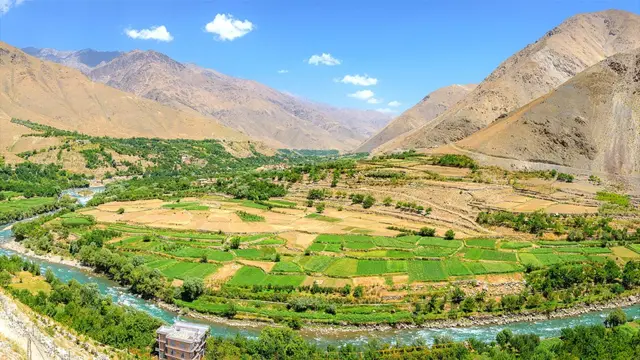
What makes Panjshir historically significant is its geography. The valley is narrow, with only one primary entrance through a rocky gorge. This has made it nearly impossible for large, conventional armies to navigate or conquer. Throughout history, from the time of Alexander the Great’s campaigns to the British interventions, the valley has served as a sanctuary for those seeking to hold out against superior numbers.
The 20th century cemented Panjshir’s reputation as the “Valley of the Unconquered”. During the Soviet-Afghan War in the 1980s, the valley became the headquarters of the Mujahideen leader Ahmad Shah Massoud, known as the “Lion of Panjshir.” Despite nine major Soviet offensives involving tanks and aerial bombardments, the valley never fell. The tactical brilliance of the defenders utilized the high ground to ambush armored columns in the narrow passes below. Following the Soviet withdrawal, Panjshir remained a bastion of the Northern Alliance during the Taliban’s rise in the 1990s, serving as the core of the resistance until 2001.
The Tomb of Ahmad Shah Massoud is located in “Saricha”, this mausoleum is the valley’s most prominent modern landmark. Built with a blend of traditional and contemporary Islamic architecture, it sits on a hill overlooking the valley, serving as a pilgrimage site for many Afghans. And The Panjshir Gorge is the entrance to the valley is a historical site in itself. The rusted remains of Soviet tanks and armored personnel carriers can still be seen along the roadside, acting as a grim, open-air museum of the conflict that defined the late 20th century. The most precious thing ancient Emerald Mines that plays an important role to make Panjshir famous since ancient times for its high-quality emeralds. These mines are not just economic hubs but historical sites that have been worked for centuries, funding various eras of the valley’s administration and defense.
The Panjshir Valley is a rare place where geography and human history are inextricably linked. Its history is not recorded in books alone but in the very stones of its mountain passes and the spirit of its inhabitants. It remains a testament to the idea that terrain, when combined with a fierce sense of independence, can withstand the pressure of empires.
Places to visit:
- The Tomb of Ahmad Shah Massoud
Nuristan
Nuristan is a remote province in northeastern Afghanistan where nature strongly influences everyday life. It is Surrounded by high mountains and thick forests, it has a cool climate, green valleys, and a calm environment. Because it is really hard to travel there and do business, it has remained largely untouched. So Nuristan has preserved both its natural beauty and traditional lifestyle.
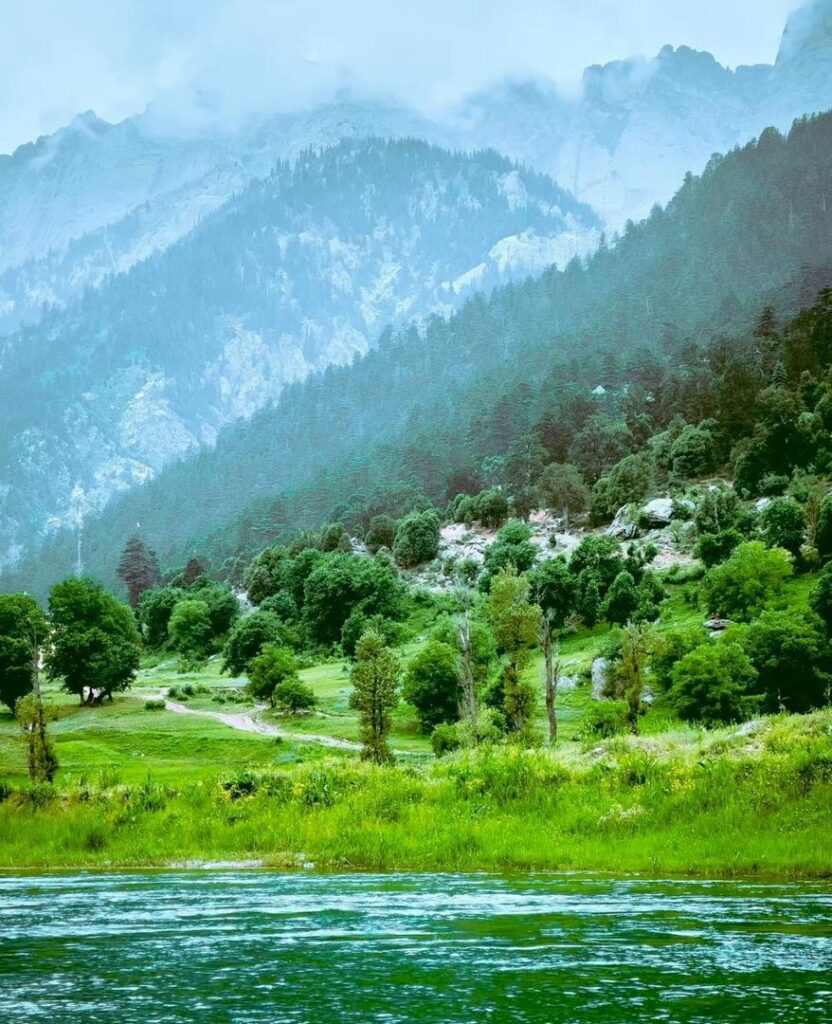
The landscape of Nuristan is both diverse and dramatic, in addition: it has a scenic view with dense forests, rivers, and steep mountain slopes. Meanwhile, Parun is the provincial capital and it has few more famous districts such as Wama and Kamdesh which are located in fertile valleys with striking views. The scenery changes with the seasons, from lush green summers to quiet, snow-covered winters, which is why Nuristan is often compared to a small version of Switzerland. It is also known as one of the national parks of Afghanistan.
Nuristan also has a rich history that adds to its deep tradition and culture. Formerly called Kafiristan, the region adopted Islam in the late nineteenth century “during the kingdom of Abdul Rahman Khan” and denominated as Nuristan, meaning “Land of Light.” Traditional wooden mosques, shrines, and carved buildings—especially in Kamdesh—show the area’s cultural heritage and skilled woodworking traditions.
The people of Nuristan live closely with their environment. Homes are built from local materials such as mud, stones, and woods, and the daily life depends on farming, herding, and forestry. Strong community ties and hospitality remain central to the region. With its natural landscapes, historical sites, and traditional culture, Nuristan is one of the most distinctive regions of Afghanistan.
Despite its remote location, Nuristan offers valuable insights into Afghanistan’s cultural and natural diversity. Its incomparable landscapes, historic sites, and resilient communities make it a unique region with lasting significance. So, it stands out as one of Afghanistan’s most unique and meaningful destinations with its natural scenery, cultural landmarks, and distinctive way of life.